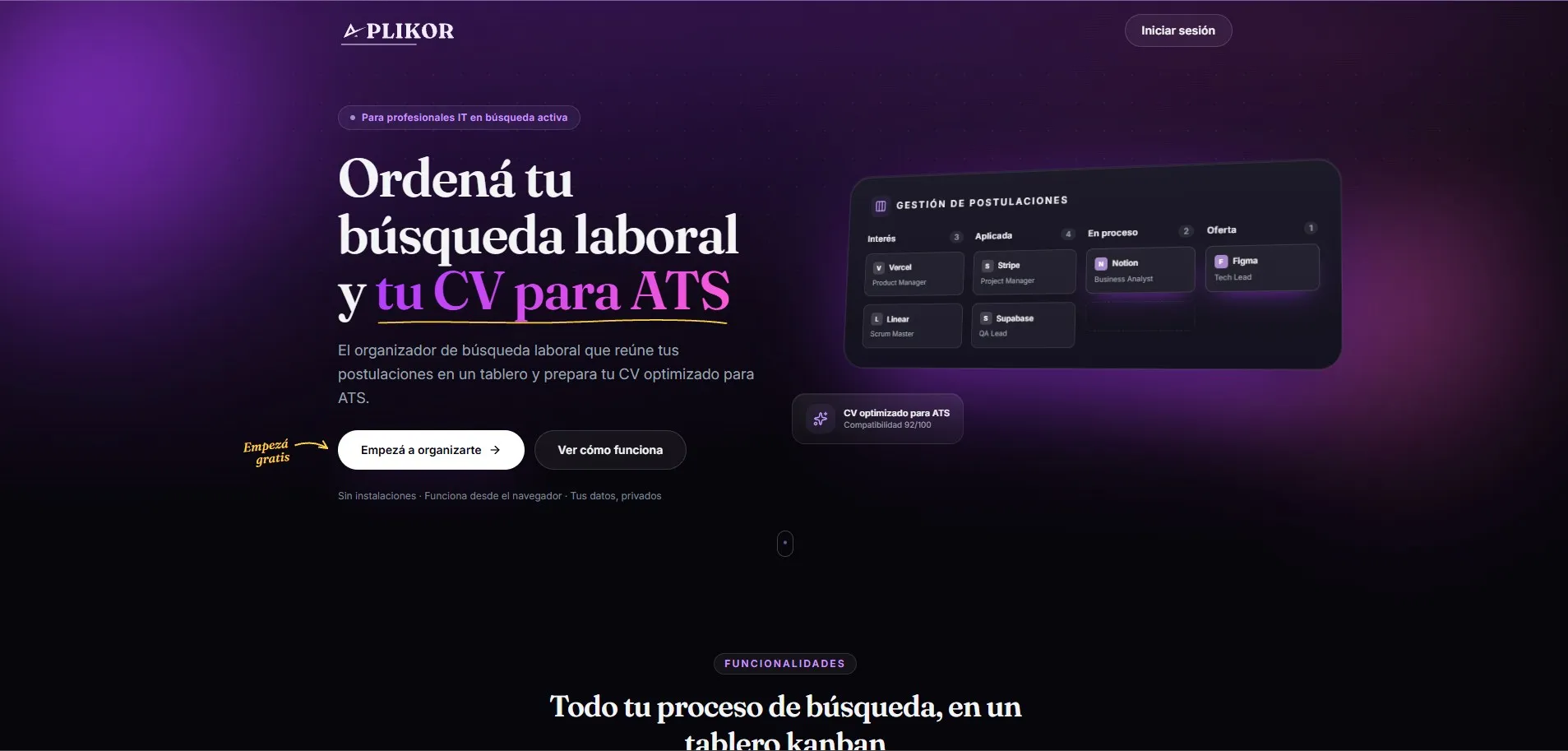
- Product and development — from idea to MVP
- 2026
- React 19 · TypeScript · Vite · Supabase · TanStack Query
Where it came from
It started in 2026, after I was laid off from my previous job. Once I began looking, loose notes about every company I applied to started piling up, and at some point the question asked itself: why not build a site to manage this.
It is a personal project end to end. I defined what I wanted to solve, set the scope and built it.
The brief
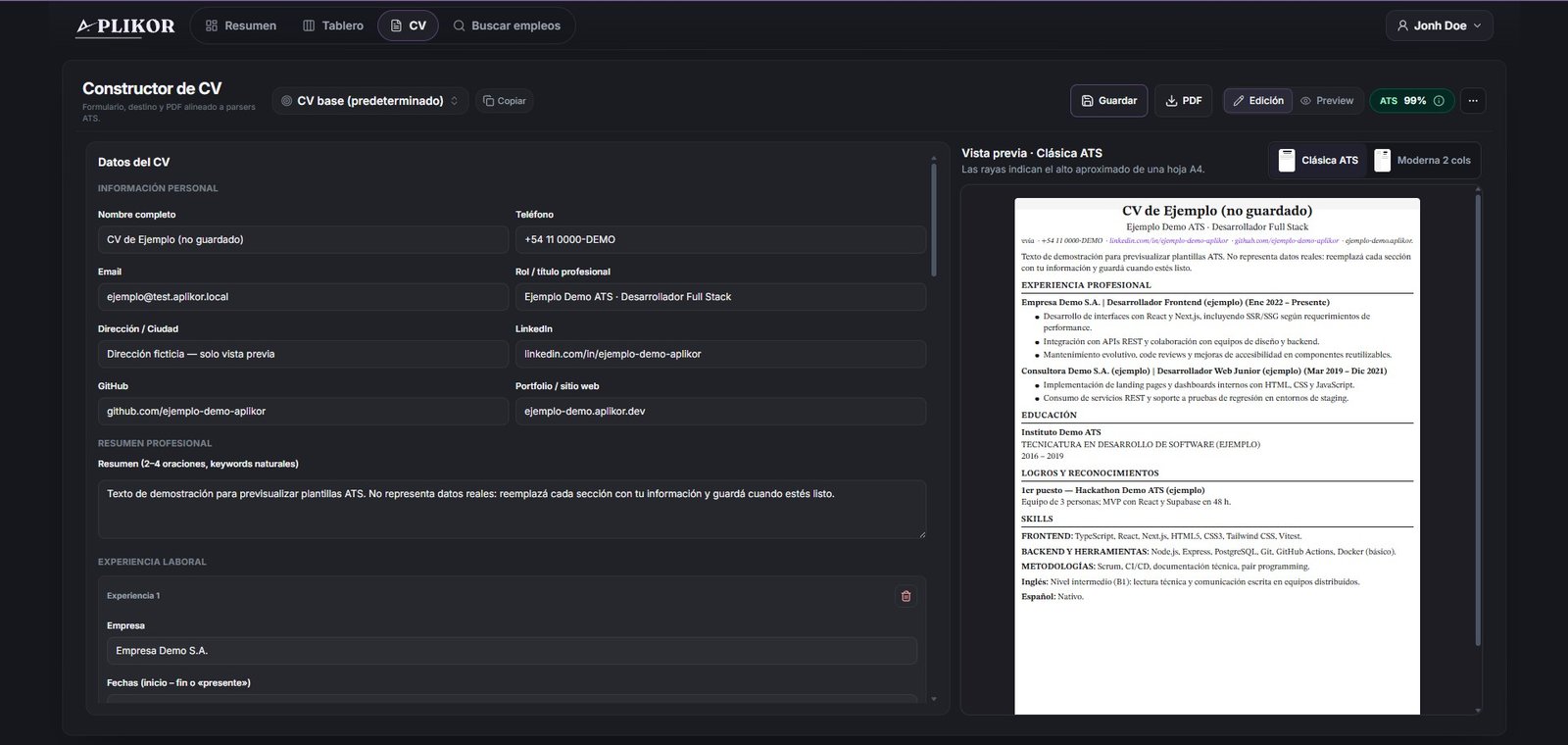
The tracker part was clear. What gives the product its point is what came after: if the real problem is landing interviews, the tracker alone is not enough. That is why the CV builder is not an add-on but the other half, and why there is validation against ATS filters — there is little value in organising applications that get discarded before a person reads them.
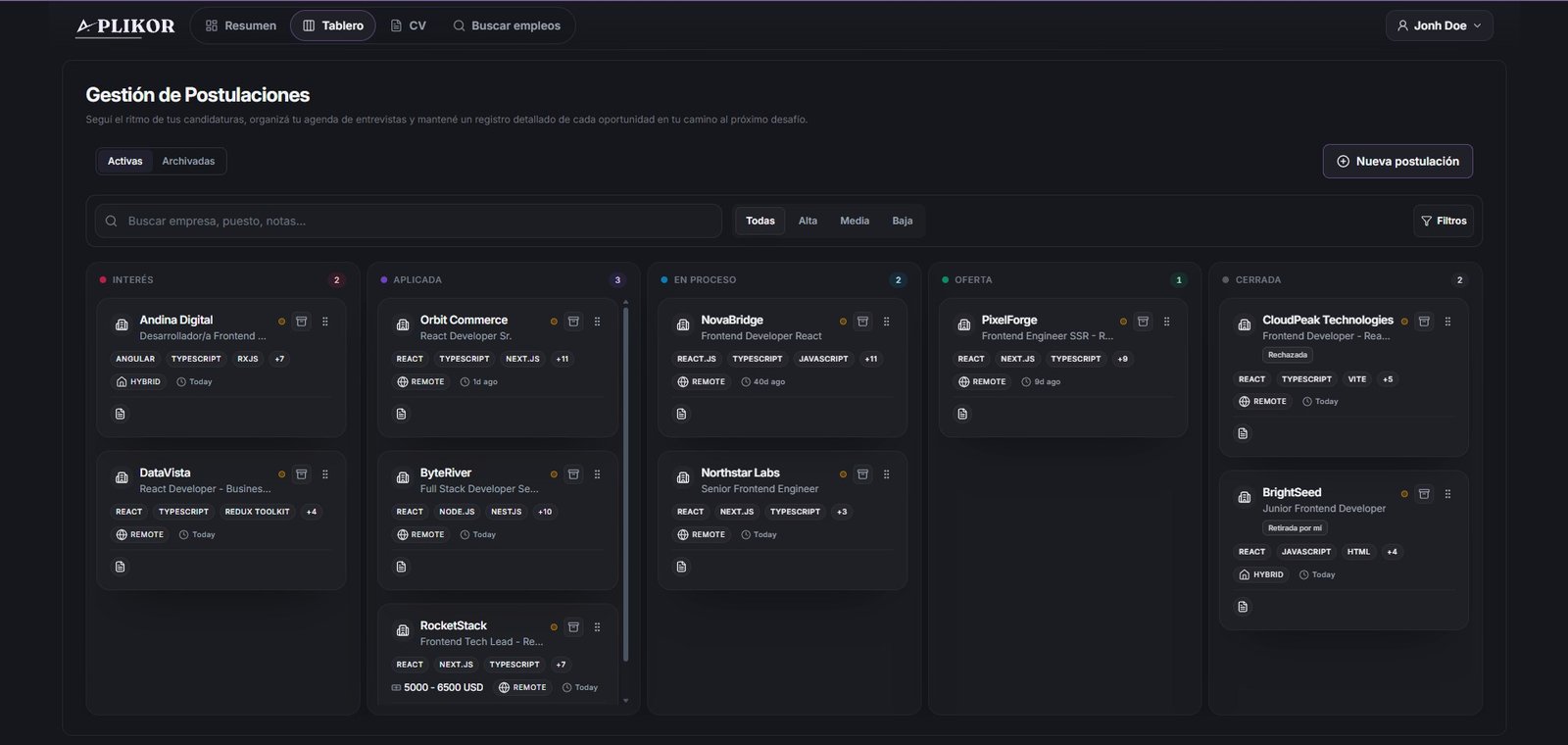
Built on Supabase with per-user isolation at the database level, a feature-based architecture, and optimistic updates on the board so dragging a card feels instant.
The method
I built it with AI agents on spec-driven development: I wrote the specs, set the architecture and the product decisions, and validated the result across several security passes and E2E tests.
How it is going
It is in development, close to MVP. Some things were left along the way that I chose not to pursue for now, and a browser extension to capture job posts in one click is the next step.
Problems and solutions
Job hunting produces a lot of information that lives nowhere: which company you applied to, what they offered, what they were looking for, whether it was remote or hybrid, where each conversation stalled. I was keeping loose notes and by the third week I had lost track.
A five-column board, from interest to closed, with drag and drop, filters and a hub showing metrics and recent activity. Each application holds its own information instead of being one more note.
A generic CV does not clear ATS filters, and keeping one tailored per application by hand stops being viable past a handful.
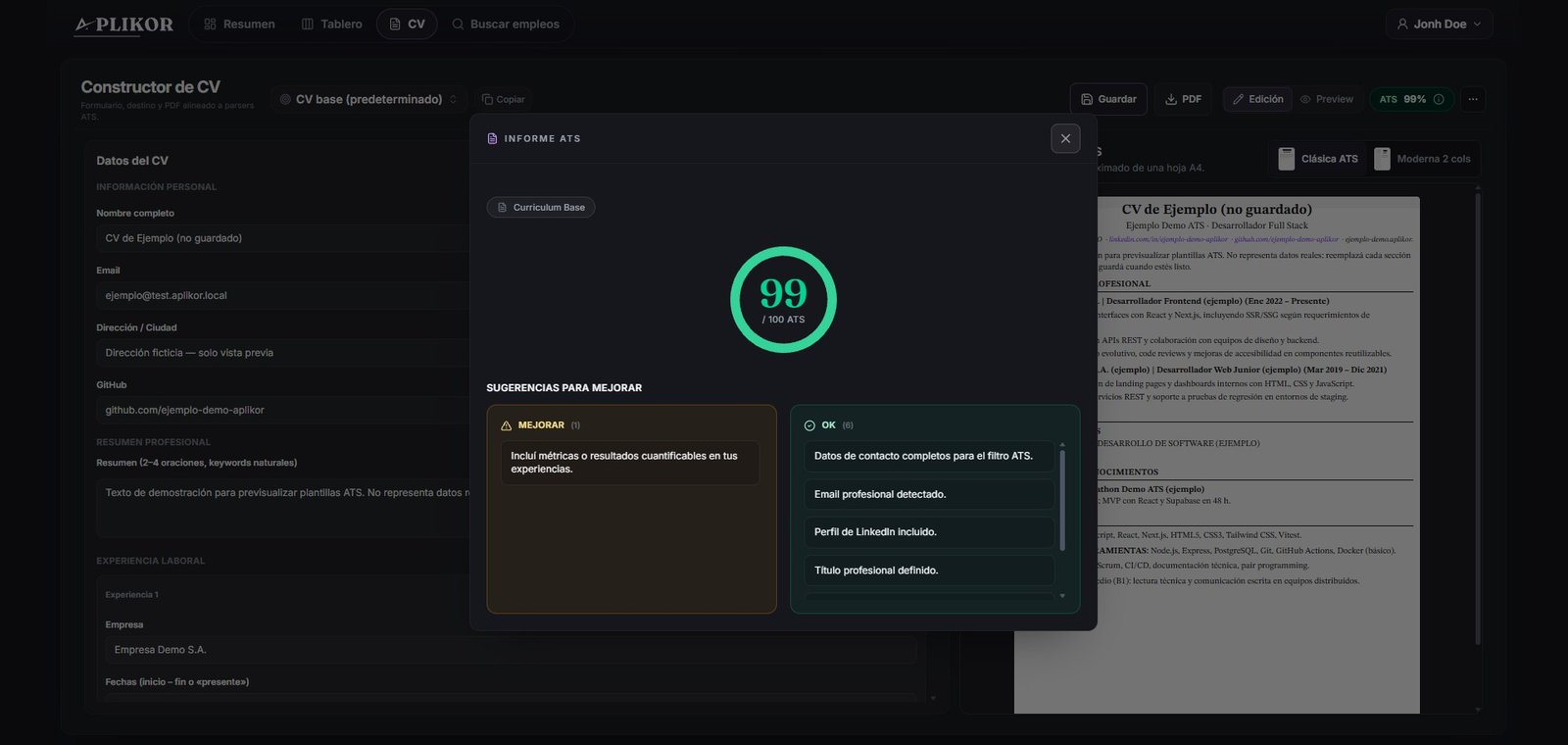
A CV builder with ATS-oriented templates and a heuristic 0-100 score that flags what is missing before you send it. Each application can link its own CV, and an existing one can be copied and adapted instead of starting from scratch.
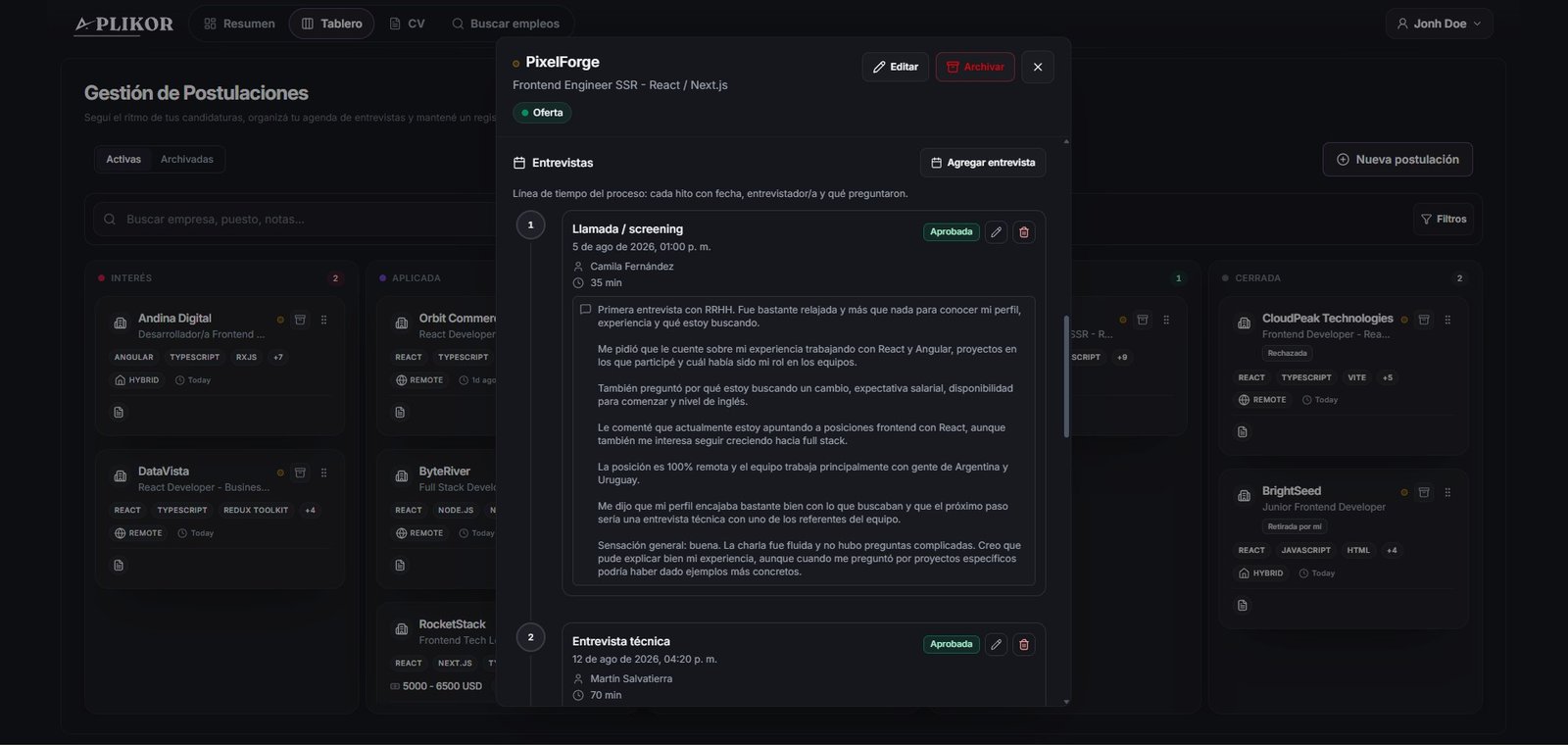
After the first interview you lose the thread: who ran which one, what they told you, what was left pending for the next.
An interview timeline inside each application. You schedule it with a time, who is running it and what it will cover, and afterwards the note on how it went stays attached. The whole conversation with that company reads at a glance.